In the last couple of posts, I wrote about the first steps in how to create a woodland garden and how to begin if you have existing trees.
No trees yet? No problem.
If your yard does NOT have an established grove of trees, you can still create a woodland garden. Yes, even If you have an empty lot if you are patient.
In nature, fast growing pioneer tree species such as birch or quaking aspen are the first to start growing. These are the trees that first colonize an open field in your area. They don’t however tolerate a lot of shade, so when other trees start growing above them such as pines, or sugar maples, they die.
If you have a large enough garden space, you can do the same process. Plant fast growing trees species to act as your “pioneer plants”. These are there to provide you with quick shade. You will also want to plant permanent trees you want to be the basis of your woodland in the long term future.
If you don’t have a large garden space, I would just make sure you select trees that grow pretty fast and will be your permanent trees. Even oaks that have a reputation of being slow growing actually can grow close to 2 feet per year when they are young, if you select the right ones, such as the Northern Red Oak (Quercus rubra).

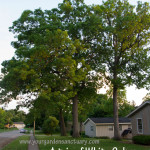
photo credit: andreasbalzer via photopin cc
It will take a few years for your woodland garden to mature, but it will be worth the wait. I will cover how to get your trees to grow the fastest in a future post.
Create a woodland garden in a Smaller yard
When you create a woodland garden in a small yard, you will want to select smaller trees. This can be done through selecting the smaller cultivars of your local forest trees.

(www.jfschmidt.com)
For example, a commonly planted tree, the Red sunset red maple (Acer rubrum ‘Red sunset’) can get 60’ tall and 50’ wide.
Instead you could plant a Bowhall red maple (Acer rubrum ‘Bowhall’) that will only get about 40’ tall and 15’ wide.
If those are still too big, you may want to select entirely different trees that emulate the look of those trees.
For instance, instead of a sugar maple (Acer saccharum), you could select a Rocky Mountain Glow® maple (Acer grandidentatum ‘Schmidt’) that will probably be about half the ultimate size of the sugar maple, but have a similar fall color.
If you have a large garden area, say over an acre, you can create a more authentic forest using the exact same trees and shrubs that are found in your area.
Spacing trees in your woodland garden
You will want to plant them closer than most people are comfortable.
It’s amazing how many people think that since this tree says it grows to 40’ wide that if I am planting two of them, they have to be 40’ apart.
That would be the case if you want your tree to stand out and grow as a single specimen. That’s not what we are discussing here though.

Hopefully, however when you took that walk in the woods, you noticed that those trees were a whole lot closer than 40’ apart. If not, go back and talk another look, this time without your smart phone on, playing Plants versus Zombies.

You can give your trees more room between each other than you might have seen in the woods, but the quicker that their canopies touch, the quicker your garden will feel like a forest. Certainly 5 to 10 feet apart is reasonable for some trees, especially if you are willing to do some pruning.
In fact, some of those multi-trunk clump forms of trees that are sold are actually different trees that were all planted together when they were small. So, it’s clear trees can adapt, especially when they are young.
Previous posts: First Steps in Creating Woodland Gardens and Creating a woodland garden #2


Kathy McDonald says
November 3, 2018 at 12:57 pmHi Jim
This is an older article, wondering how your woodland is growing. This is my backyard goal. Where are you located?
Jim says
November 6, 2018 at 9:32 amThe trees were doing fine when I moved to my new home.