
It has been a while since I have written anything, so I thought I would share some rambling thoughts at the end of a busy May. I don't usually do stream of consciousness writing but what the hey? So in no particular order here are a few of my thoughts related to how my own relatively new yard's landscaping is developing. … [Read more...]
A Case for Non Native Plants

#1 - Invasive pests are less likely to kill your Non-Native shade tree Exotic disease and insect pests are big problems because exotic pests evolve with plants that are related to our native plants. The pest and its host plant compete in an "Arms Race" in their homeland where they are evenly matched. Problems occur when the pest with its "advanced weaponry" come to a new land where it finds plants that it knows how to attack (they are genetically similar to the ones it "grew up with") but … [Read more...]
Tri Color Beech for Summer color and winter bark
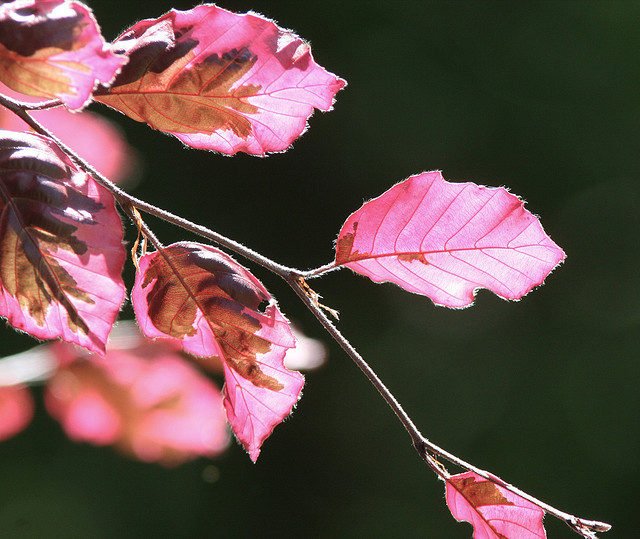
In the past, I have recommended two purple leaf beech trees for residential gardens. I have already covered the purple fountain beech. Now, I will cover the Tri-color beech, but with a caveat at the end of this post that may be changing my recommendation. … [Read more...]
School Trees Not Street Trees

It is conference season in the "green" industry and I have been busy at both as an attendee and a vendor. Before I go to another one and get even more ideas, I wanted to share one. This fabulous one, I picked up from native plant icon Gerould Wilhelm from a talk he gave with plantsman Roy Diblik. Before I share it, let me give a bit of background from Gerould's talk. Why most trees are really lonely To simplify Gerould's talk too much, let's say the jest of it was that plants live in … [Read more...]
Live Stakes for Landscaping as Inexpensive Plants

Unless you are in the field of ecological restoration you are probably unfamiliar with the term, live stakes. But perhaps you are like me, and appreciate a good deal. Whether it is a pair of khakis for 50% off the last marked clearance price or a $5 Monday night burger deal at a local restaurant. I love saving money. This frugality (my term, my wife and kids term would be cheapskate) also extends to my yard. While when it comes to landscaping tools or plants for clients, quality is the name … [Read more...]
Two shade loving Asters that pollinators flock to
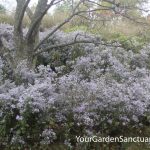
Fall blooming plants such as goldenrods and asters are great additions to almost any garden. Most of them like to grow in full sun. There are, however, exceptions. Let's look at two of these that are very similar, the Blue Wood Aster (Symphyotrichum cordifolium) and Short's Aster (Symphyotrichum shortii). … [Read more...]
Adding the Ground Layer to Finish an Ecological Garden Design
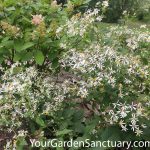
Let us wrap up the landscape design that was begun in Trees for Carbon Sequestration and Wildlife Support and continued in Wildlife Friendly Garden Design by planting the ground layer. This layer will include a meadow-like planting of perennials and grasses. … [Read more...]
Trees for wet areas and poorly drained soils

I would like to talk about selecting trees for wet areas, as I recently received the following question from Aubrey from the Denver Colorado area: We have an area of our yard at the bottom of a small slope. It tends to stay damp to wet. It's also clay. What tree would you recommend for that area? … [Read more...]
Wildlife Friendly Garden Design
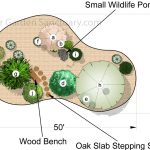
Last post, I showed the start of a wildlife friendly garden design and selected a Swamp White Oak tree to anchor it. That tree was chosen due to the high value it provides to wildlife and due to its high carbon sequestration rates. Now we are going to add some additional trees and shrubs to make the planting an even more wildlife friendly garden. Picking Two Smaller Trees First, let's pick the evergreen tree. In Northern Illinois, there are very few native evergreen trees. Eastern red cedar … [Read more...]
Trees for Carbon Sequestration and Wildlife Support

Picking the right trees for carbon sequestration is a good step to take in creating a Landscape that does more than look pretty. In this post, we will begin a 3 Part Series showing an ecological mixed landscape bed design by selecting trees to sequester CO2 and support wildlife at a high level. … [Read more...]