In a previous post, I wrote about using a natural area as the inspiration for your garden. In it, I wrote about using plants and materials that are native to your area. Doing this helps to bring about the feeling that your garden is actually related to the surrounding landscape.
To use native plants in your garden to invoke a natural place, we need to know what plants to use as well as how they are arranged in natural areas. To do this it can help to classify the natural area we are trying to evoke. This way we can find out what plants would typically grow there.
We may not stick exclusively to those native plants, but we need to at least know what they are. For instance, if you are in an area where ferns are a big part of the natural landscape, you would probably want to use ferns of some type in your design.
What type of Natural areas are near you?
There are many ways to classify native areas, but generally they are either:
- Forest and woodland
- Shrubland and Grassland
- Wetland
This is a start, but really not a lot of help as these terms are too general. I mean there are forests in Alaska and Florida right? They probably don’t share a lot of the same plants.
But if we find out what type of Forest/Woodland or Shrubland/Grassland or Wetland is in our area, then it gets more useful. I will use my area as an example.
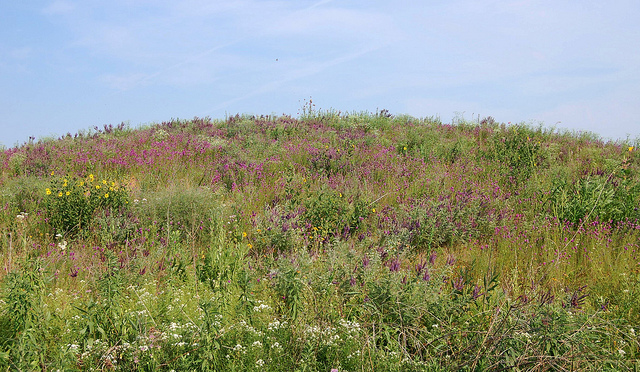
In the area around my home, the Shrubland and Grassland is classified as Central Tallgrass Prairie.
In an upcoming post, I will show you how you can identify the natural areas around you. But for now, lets talk about one near me.
Prairies
Prairies were the dominant natural area in my region before they were replaced with corn fields. Central Tallgrass prairies specifically. Prairies can be an excellent model for nature inspired landscapes and gardens.
It makes sense to use Prairies as a natural area to model because Northern Illinois represents the eastern edge of the prairie in the United States. That fact is the reason that the soils in Illinois are so rich for agriculture.
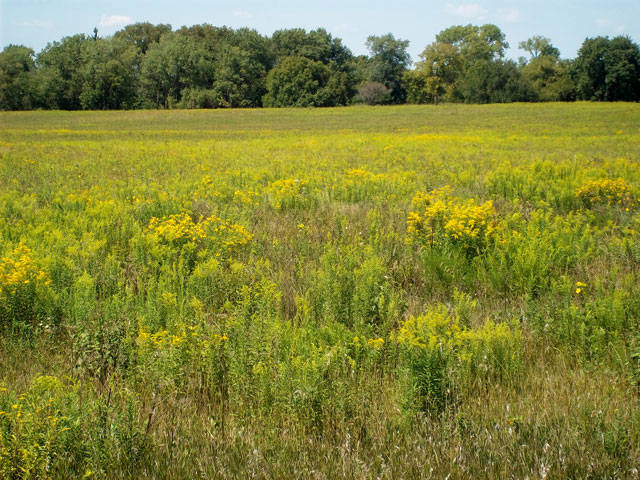
The majority of prairie plants are actually underground as roots. These huge and deep root systems break up the soil as well as add organic matter deep into the soil when they die.
This was done repeatedly over the last eight thousand years the prairies dominated the landscape. It resulted in the three feet of topsoil we had before it was striped away by developers and resold to us in bags at Home Depot.
The Roots of the Prairie
Just how deep do those roots go down?
The native to my area grass, Big Blue Stem (Andropogon gerardii) has roots that extend 8 to 10 feet underground! Even the small Prairie Dropseed (Sporobolus heterolepis) extends up to 5 feet deep into the ground).
By contrast the grass that is in you probably have in your front yard has roots that go 3 to 4 inches.
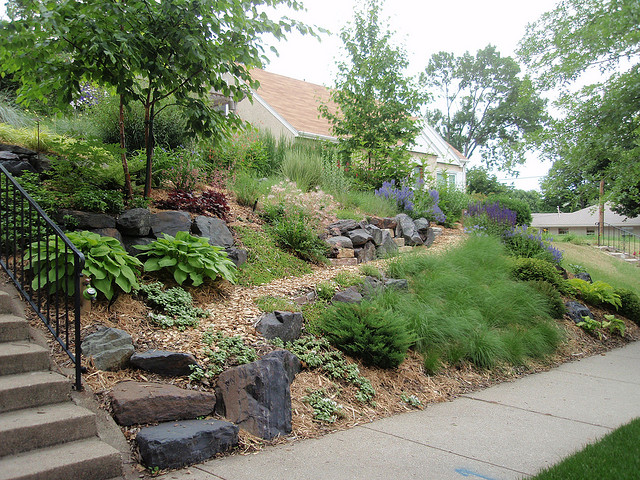
photo credit: Field Outdoor Spaces via photopin cc
Prairie Inspired Gardens
One advantage to using the prairie as your inspiration is the fact that you can get a prairie style garden to look great in only a few years.
The Central Tallgrass Prairies typically had fires every 2 to 5 years, so it’s plants had to mature quickly to ensure their survival. Not only that, they also had to withstand droughts and competition from neighbors. This resulted in some tough plants that matured quickly and adapt well to the demands of our residential landscapes.
In natural prairies, the plants typically grow interspersed together. This creates a rather wild look when translated to a residential landscape.
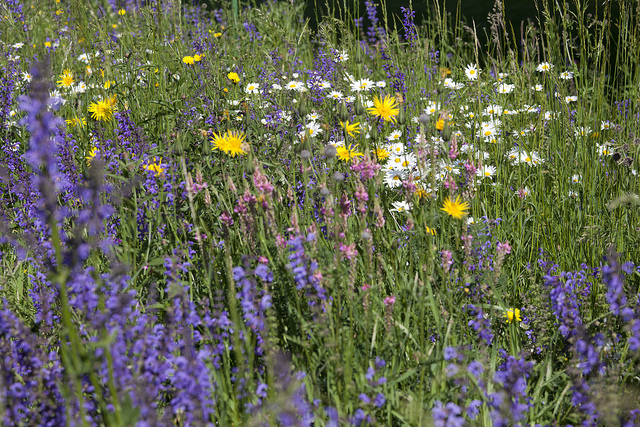
Besides looking great quickly, another reason prairie inspired gardens are probably so popular is that they seem to be a natural extension of more traditional perennial gardening.
Instead of interspersing all the plants together, you can create smaller groupings that support each other. This gives you get a nice compromise between the informal prairie and the highly “landscapy “look of large drifts of individual types of perennials. The work of landscape designers like Piet Oudolf are great examples of this approach.
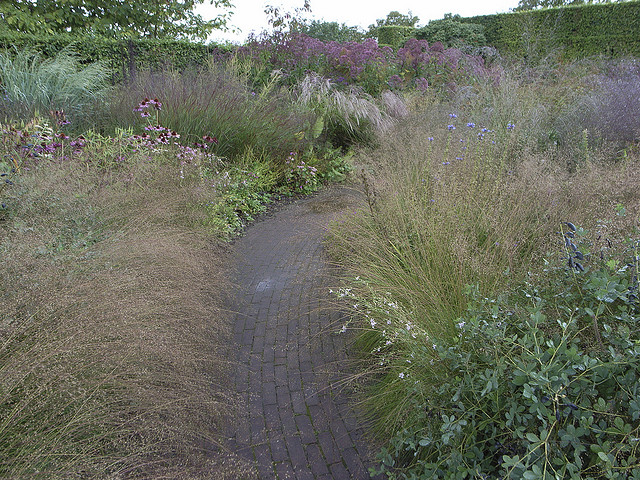
photo credit: Tony Spencer TO via photopin cc
Resources For Creating a Prairie inspired Garden
One of the better free resources I have found is the free guide How to Grow a Prairie from Prairie Moon Nursery. It gives a lot of practical information to actually recreate a prairie from seed.
There are lots of books on prairie style gardening available. My advice would be to go to your library and see what they have related to Prairie gardening or Meadow gardening.
Specifically you may want to look for one of the following three books:
- Prairie-Style Gardens: Capturing the Essence of the American Prairie Wherever You Live* by Lynn Steiner,
- Gardening With Prairie Plants: How To Create Beautiful Native Landscapes* by Sally Wasowski Wasowski, or
- The American Meadow Garden: Creating a Natural Alternative to the Traditional Lawn* by John Greenlee
If you think prairie style gardens are a bit too “wild” looking, you may want to instead look at these books:
- Planting: A New Perspective* by Piet Oudolf and Noel Kingsbury, or
- The Know Maintenance Perennial Garden* by my neighbor to the north, Roy Diblik.
Roy’s book, while not really about prairies, includes planting plans that are inspired from them and can be adapted to your site. He also has plans for both sunny and shade sites. Although I have to say I wish he would have included photos of actual gardens made from those plans.
While I appreciate the beauty of a prairie, it just does not speak to me the way a forest or woodland does. In my next post, I will write about those areas.
Cher MacNeill says
Great photos, great post! Just discovered your blog… Have you any opinion on carex matrix plantings à la Roy Diblik (Know Maintenance)? I’m hoping to use more carex in my shade/part-shade garden. From an ecological standpoint, using carexes to replace traditional high maintenance lawn grasses is definitely the way to go!
Thanks,
Cher
Jim says
Thanks, I am glad you like it.
I am a huge fan of matrix planting style using carex especially. Penn sedge, Canadian ginger, and Christmas fern has been a planting combo I have been planning to use in my new landscape.
Matrix planting is an approach that I will be using in some other projects this year as well.
Jill says
Thanks for another inspiring post! I love the examples you give. Continual thanks for the great reading recommendations! I’m going to try to incorporate a little patch of a more formal prairie planting like the photo example along a pathway leading to my native mini alder stand. I’ll check out my local native plant society for some ideas about what natives I can use.