Turning a side yard into a simple prairie planting using plants grown from seed this year is today’s blog topic.
I have made gardens before with prairie plants in 1 gallon, quarts and even 38 plugs size before, but never with plugs I started from seed the same year.
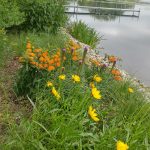
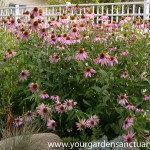
Nursery grown plants can achieve quick results even when planted at a small size. For instance, here is a planting done mostly with 38 plugs and quarts with a few gallon size perennials added in.

This is the same planting two years later.

Plan A?
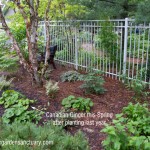
My side yard has been in a state of chaos pretty much since I moved into this house a few years ago. It was grass in the beginning, but then I installed a vegetable garden and killed my grass. I was planning on putting in wood chips to eliminate the need for mowing here.
Great plan right?
Except I never put in the wood chips.
OK, so I went on to plan B.
I killed the weeds and then I installed a No Mow Fescue mix from Prairie Moon Nursery. This is a slow growing, drought tolerant lawn that only needs to be mowed every month or so. I planted this at my old house in a narrow path and it worked great there.
It didn’t work so great here.
Long story short, a drought during the summer and just forgetting to water it made my lawn patchy and weak growing. I could have overseeded and revived it, but I decided to forget Plan B. I really don’t like mowing around my vegetable garden even if it’s only once a month.
On to plan C.
How about a itty-bitty simple prairie?
I already have a prairie like planting on my shoreline (see this post) but thought maybe a smaller one would be nice in my full sun side yard. In that other planting, the grass holding the planting together is Prairie Dropseed (Sporobolus heterolepis). This time I will try Little Bluestem (Schizachyrium scoparium).
While Prairie Dropseed is more forgiving for typical garden use, the foliage color of Little Bluestem is nice and fall and winter interest can be better in my opinion then Prairie Dropseed.

The Planting (non)Design
Instead of making a formal design, buying plants, and laying them out for optimum aesthetics I went with more of a random planting within a matrix of Little Bluestem. Kind of like you would get in a seeded prairie planting.
However, I limited the number of species to just nine and did group them together a bit. This simpler planting makes it less busy. Most people will find it looks better, especially in this smaller space. I won’t be seeing this planting that much but my neighbor will.
Growing the Plants
I grew these plants from seed this Spring using a LED grow light and Ray Leach Conetainer plant containers.

Conetainers direct the roots downward which enable them to access water in the soil quicker and thus get established more quickly. This well formed root system grows out very quickly into the soil the plant is placed in. There is not a lot of potting soil that dries out quickly and needs to be watered constantly like larger plant container sizes.

Species Choosen
Here are the plants I included. These were all plants I grown from seed in the Cone-tainers except for a couple of quart sized plants I got from a supplier as a give away. A few of the plants were plugs I grew last year (the big plants in the photos), the rest were this years plants planted in July.
The plants were placed about 12″ apart, although some are closer. I plan on moving some next Spring when I relocate the Rhubarb to another area and will have to fill that area in. I want a thick weed suppressing planting so they are close.
Prairie Blue Little Bluestem (Schizachyrium scoparium ‘Prairie Blues’) – This is a seed grown western strain of Little Bluestem that is supposed to be a bit more upright and have a bluer color then the straight species. We shall see. About 50% of the plants are Little Bluestem. They will provide the structure to hold the other prairie plants upright.
Wild Bergamont (Monarda fistulosa) – Actually this was one I grew from seed and planted last year. It is HUGE this year (for a plant not even 2 years old yet). If it stays in this spot it will get sheared next May to reduce it’s height and yes it will get deadheaded as it seeds about.

Showy Goldenrod (Solidago speciosa) – This was planted last year as well. A BIG, showy and aggressive plant (not as bad as some goldenrod though). The flower heads on these can be stunning, I am eagerly awaiting them to bloom.
Blazing Star (Liatris spicata) – Straight species this time instead of the cultivar, Kobold that I used in the shoreline planting.
Rough Blazing Star (Liatris aspera) – I had one or two I grew last year left over that I planted here.
Purple Prairie Clover (Dalea purpurea)- A common prairie plant I have never grown before but often admired.

Butterfly weed ‘Gay Butterflies‘ (Asclepias tuberosa ‘Gay Butterflies’) – Even though I have plenty of Butterfly weed, I couldn’t help myself. This seed strain, Gay Butterflies has yellow and red flowers as well as the common orange. The one that is already blooming is indeed red!

Husker’s Red Beardtongue (Penstemon digitalis ‘Husker Red’ ) – A seed strain of the prairie plant with burgundy leaves. A popular perennial plant.
Prairie Milkweed (Asclepias sullivantii)– Better behaved then common milkweed (does not roam) with all the benefits although not as drought tolerant. I am really looking forward to seeing how this one does.
The Simple Planted Prairie


Here is the planting about a month later. I don’t believe it but at least one of my 7 month old Gay Butterfly milkweed actually has red flowers. This Monarch refused to sit still enough for me to photograph her on it but I did catch it on the larger orange flowered one I planted last year!

Here it is in September if done right a bunch of seeds can become a simple planted prairie pretty quick.


Jean Fast says
August 17, 2018 at 12:28 pmYou transform your yard wherever you live! Beautiful!
U K says
August 20, 2018 at 11:34 amThank you for sharing more of your helpful knowledge!
Tonycliftontaxi says
August 22, 2018 at 10:07 amJim, thanks so much for the post.Much thanks again. Really Cool.
Lisa Zystro says
April 2, 2019 at 9:15 amI noticed you say that you were planting “within a matrix” of your selected native grass. In designing your little garden, how did you think about the relationship between your bunchgrass and your forbs? What do you think is a good ratio of grasses to forbs?
Jim says
April 2, 2019 at 8:49 pm50-50
Liz Weamer says
April 16, 2019 at 5:44 pmHey Jim, I am about to start a bunch of little bluestem from seed myself using the ray leach conetainers, and have looked all over the internet for more details on the exact method (it’s my first time starting anything from seed). A few questions: did you use lights during germination? How many seedlings survived? (Got my seeds from seed savers exchange). Also, will I need to transplant them into larger containers before putting them in the ground? At what point do you think they will outgrow the cones? Thanks so much!
Jim says
April 23, 2019 at 7:53 amYes I had them under grow lights. No once they get big enough plant them directly from the conetainers.